Hope Reflected

Encouragement and Hope from God's Word

Search Results for: prayer

Thursday

8

July 2021

1

COMMENTS

Selective Hearing

Written by , Posted in Christian Living, Published Work

A.W. Tozer wrote in his book The Pursuit of God that, “Most Christians don’t hear God’s voice because we’ve already decided we aren’t going to do what He says.” Each of us is guilty of selective hearing at some point or another. Only listening for the answer that we want to hear. But what about with God?
“Most Christians don’t hear God’s voice because we’ve already decided we aren’t going to do what He says.” (A.W. Tozer) | Read more at hopereflected.com

Do not stop listening

Many of us go through seasons where it seems as though we can’t hear God’s voice. During these seasons, it is of utmost importance that we do not stop listening for Him, and that we continue to pursue God through His Word and prayer. “I press toward the mark for the prize of the high calling of God in Christ Jesus,” Paul wrote in Philippians 3:14. Unless we are appealing to Him daily, how can we ever hear His call? The high calling of God is heard through the voice of Christ, and we hear the voice of Christ in His Word.
Unless we are appealing to Him daily, how can we ever hear His call? The high calling of God is heard through the voice of Christ, and we hear the voice of Christ in His Word. Read more at hopereflected.com

Even when it seems that we can’t hear Him, that is the precisely the time that we need to apply our faith and keep pursuing Him. In his letter to the Romans, Paul encouraged them that, “faith comes from hearing, and hearing through the word of Christ.” (Romans 10:17). James continued on his eponymous epistle, “But whoso looketh into the perfect law of liberty, and continueth therein, he being not a forgetful hearer, but a doer of the work, this man shall be blessed in his deed.” (James 1:25).

Be willing to obey

We aren’t merely to look into our Bibles, we need to continue to read them regularly, and apply and obey what God’s Word says. This is where many of us slip up. We complain about not hearing God’s voice because we are not willing to obey Him. We wonder why we can’t hear His answer to us asking, “What do you want me to do?” and “Where would you have me to be?” instead of obediently continuing on in the small things right in front of us. 
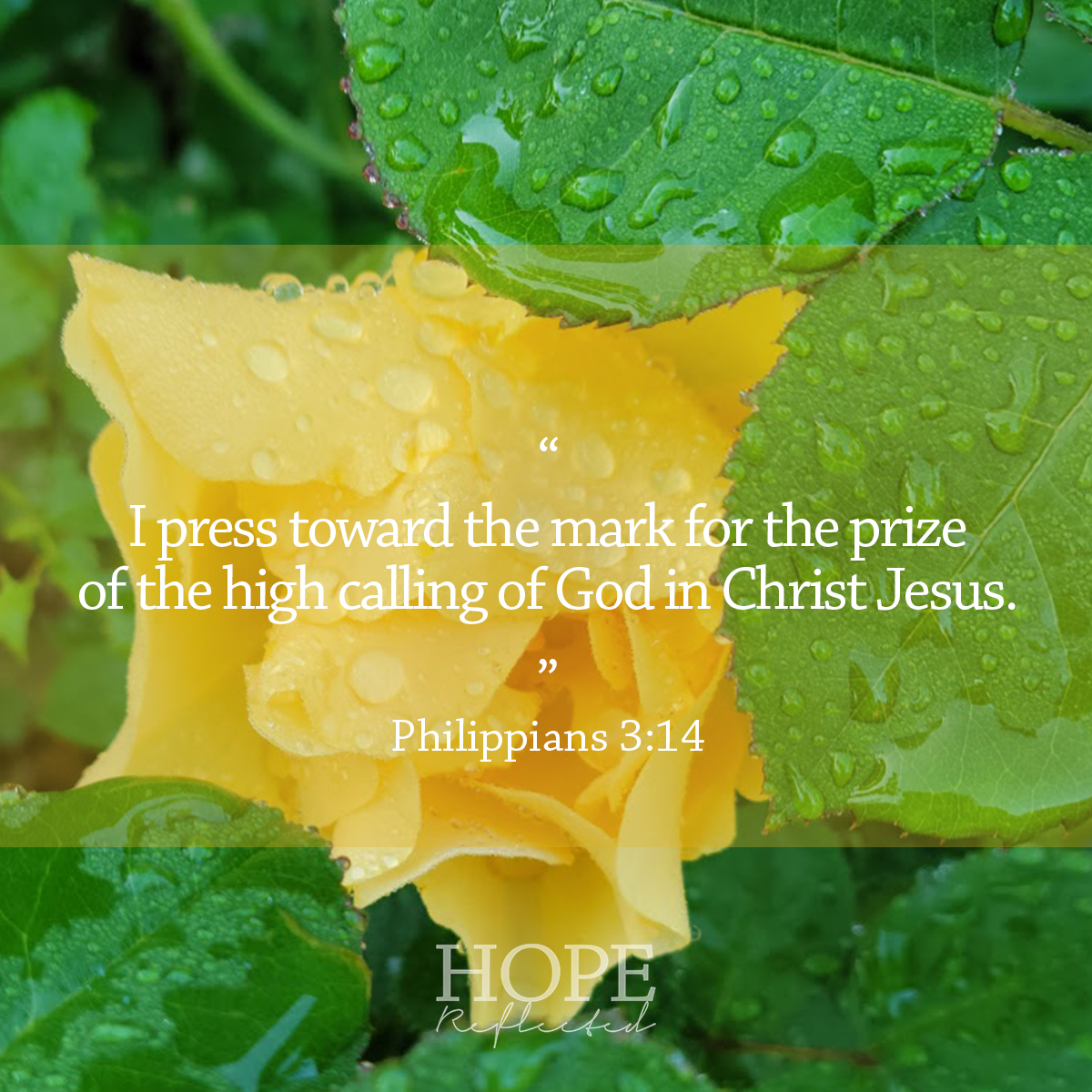
“I press toward the mark for the prize of the high calling of God in Christ Jesus,” (Philippians 3:14) | Read more at hopereflected.com

Jesus Himself said, “Yea rather, blessed are they that hear the word of God, and keep it.” (Luke 11:28). We shouldn’t be surprised or complain that we can’t hear Him if we are continually excusing ourselves for not having time to go to the very place where He promises to speak to us. For those who are daily in His Word and still say they can’t hear Him, the quantity of our devotional time may not be the problem. “Whether I hear God’s call or not depends on the condition of my ears,” Oswald Chambers wrote in My Utmost for His Highest. The quality of our devotional time suffers when we leave our sin lingering. When it seems as though we can’t hear God, we should always ask ourselves if there is some unconfessed wrong of which we need to repent. If we’re being honest, it is likely that we won’t have to look far to find it.

“Whether I hear God’s call or not depends on the condition of my ears,”

Oswald Chambers, My utmost for His highest

Are we listening only for what we want to hear, or are we drawing near to God in the small and hard work, where He promises to draw nigh to us? (James 4:8).

Originally published as “Selective hearing.” Independent Plus. February 4, 2021: 5. Print. Web.

Tuesday

3

November 2020

0

COMMENTS

Are you listening?

Written by , Posted in Christian Living, Published Work

Listening is important

We all have a desire to be heard, the problem is not many of us listen. From birth, even without words, babies try to communicate with others – because they long to be heard. Mothers typically recognize the cry of their child because they’ve spent so much time listening.

We also see this with animals. Dickens has an interesting way of communicating, using his front paws to reach out and touch us when he wants something. He also barks incessantly at any threat outside our home. We’ve become so attuned listening to his bark that we understand when he sees a squirrel, cat, or a human.

Listening requires action

Listening requires action on our part, which we tend to forget. We get caught up thinking that action comes when we speak, which is why many of us have a habit of interrupting. Rather than listening to what others have to say, we start planning a smart response, readying our reaction rather than hearing what others are saying.

One benefit to listening is that we become more receptive. After a conversation with Nathan, King David had a responsive heart to hear the Lord. In 2 Samuel 7, we understand the blessing that comes with listening, as when we truly listen, we grow closer to God. “Wherefore thou art great, O LORD God:” David proclaimed, “for there is none like thee, neither is there any God beside thee, according to all that we have heard with our ears.” (v. 22). Listening – not just laying out our prayer lists – is one of the most important aspects of our relationship with God.

Another blessing of listening is that it helps us to learn. When Paul and Silas preached the Gospel to the Berean Jews, we read in Acts 17:11, “that they received the word with all readiness of mind, and searched the scriptures daily, whether those things were so.” Mark Twain once said that, “Wisdom is the reward you get for a lifetime of listening when you would rather have talked.” We cannot learn unless we listen.

“Wisdom is the reward you get for a lifetime of listening when you would rather have talked.”

Mark Twaint

Listening also helps us to deal with hard truths and become discerning

We are all guilty of avoiding topics that make us uncomfortable. Perhaps we feel less informed than the person we’re speaking with, but more often than not, we have a hard time accepting the truth – especially when it’s not convenient. A great example of this is found in John 6. After feeding the five thousand, Jesus was preaching in Capernaum, and He went against the grain of the popular teachers of the day by sharing the truth: That salvation is found in Him alone – not in how much money we give away, or how frequently we go to church, or which family we belong to. This made a lot of people uncomfortable – it still does today – to the point that some of His followers left Him. “Many therefore of his disciples, when they had heard this, said, This is an hard saying; who can hear it?” (v. 60). Until we start listening, we will struggle to deal with the truth.

God speaks to those who listen.

Originally published as “Are you listening?” Independent Plus. June 11, 2020: 5. Print. Web.

Wednesday

28

October 2020

0

COMMENTS

Trust Issues

Written by , Posted in Christian Living, Published Work

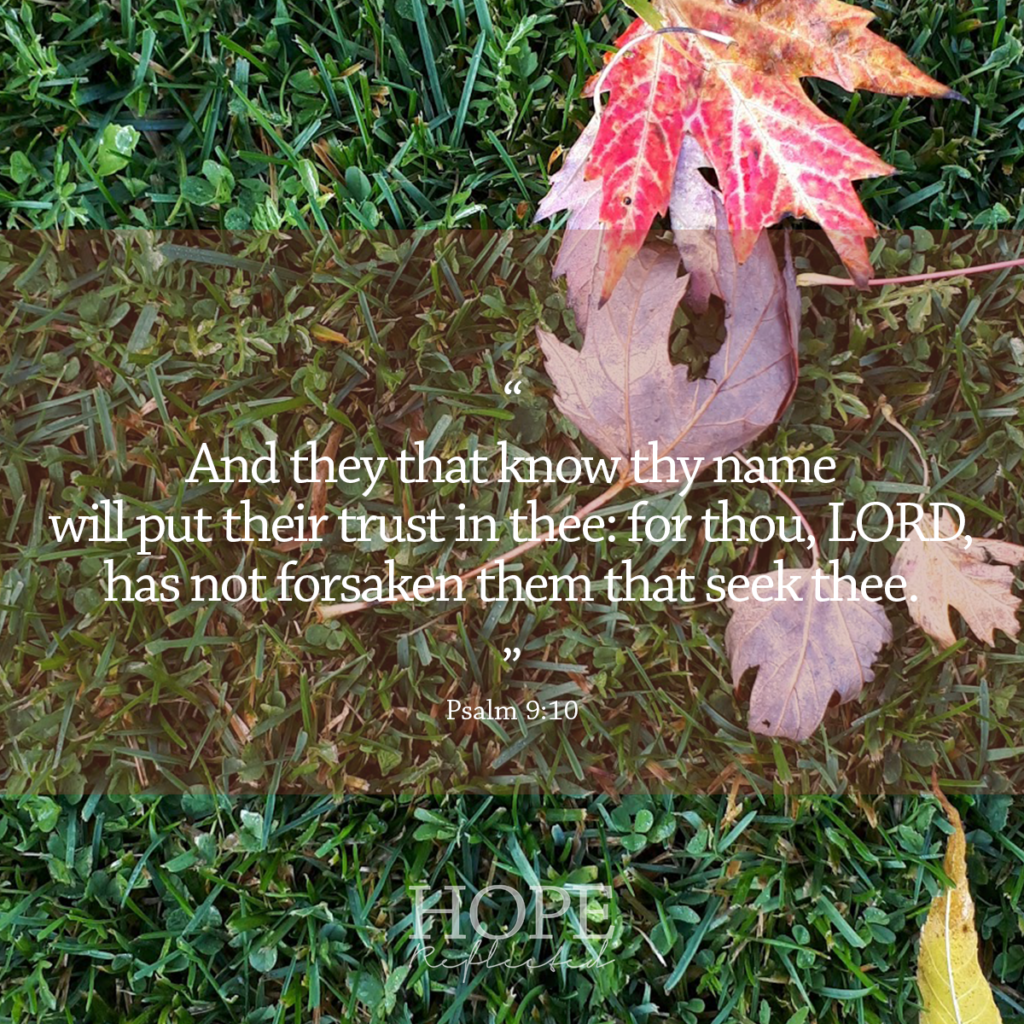
"And they that know thy name will put their trust in thee: for thou, LORD, has not forsaken them that seek thee." Psalm 9:10 | Read more about trust at hopereflected.com

Everybody trusts in something, and it is amazing what people will stake their eternal destiny on – good works, generosity, and even other people. The Bible provides encouragement and examples about trusting God. It also shows us some of the areas where we shouldn’t place our trust. We are not to trust in our works (Jeremiah 48:7) or our righteousness (Ezekiel 33:13). Isaiah wrote in Isaiah 64:6, “all our righteousnesses are as filthy rags; and we all do fade as a leaf;” – our greatest works are worthless because in ourselves we are not sufficient. Isaiah continues that the Lord can be trusted, because He is our Father, our potter, and we are the work of His hand.

The dangers of trusting in things other than God

Another area we shouldn’t put our trust is in our riches. In Psalm 49:6-7, the sons of Korah wrote about the dangers of trusting in material wealth: “They that trust in their wealth, and boast themselves in the multitude of their riches; None of them can by any means redeem his brother, nor give to God a ransom for him:” There’s nothing wrong with making money or storing up savings, but when we start to trust in our riches rather than God, we’re headed for trouble.

“And they that know thy name will put their trust in thee: for thou, LORD, hast not forsaken them that seek thee.”

Psalm 9:10

Rather than our own works and riches, we should trust in the name of God. There is power in the name of the Lord! David wrote in Psalm 9:10, “And they that know thy name will put their trust in thee: for thou, LORD, hast not forsaken them that seek thee.” We can trust the Creator of the Universe. There is a great relief when we stop searching for our own sufficiency and we choose to rest in Him. “The name of the LORD is a strong tower: the righteous runneth into it, and is safe.” (Proverbs 18:10)

Trust in God’s mercy

Not only is the name of the Lord a strong tower, it is because of His mercies that we are not consumed (Lamentations 3:22). Even when it feels like God forgets us, or like He can’t hear us, we can trust in His mercy. When David wrote Psalm 13 and Psalm 52, he was enduring seasons of darkness and sorrow. After lamenting to the Lord about his pains and the people fighting against him, take notice how he finishes his prayers: “But I have trusted in thy mercy; my heart shall rejoice in thy salvation.” (Psalm 13:5), “But I am like a green olive tree in the house of God: I trust in the mercy of God for ever and ever.” (Psalm 52:8)

“Trust in the LORD with all thine heart; and lean not unto thine own understanding. In all thy ways acknowledge him, and he shall direct thy paths.”

Proverbs 3:5-6

Although he was enduring hardships, David could flourish and rejoice because he trusted in God’s mercy. Proverbs 3:5-6 tells us that we should, “Trust in the LORD with all thine heart; and lean not unto thine own understanding. In all thy ways acknowledge him, and he shall direct thy paths.” Our hearts are deceitful, our feelings change frequently, and despite what some of us think, we don’t actually know everything. God on the other hand never changes. His heart doesn’t change; His feelings don’t change; He knows all and we are in the palm of His hand. We can trust Him!

Originally published as “Trust Issues.” Independent Plus. May 28, 2020: 5. Print. Web.

Thursday

17

September 2020

0

COMMENTS

Cast, don’t carry

Written by , Posted in Christian Living, Published Work

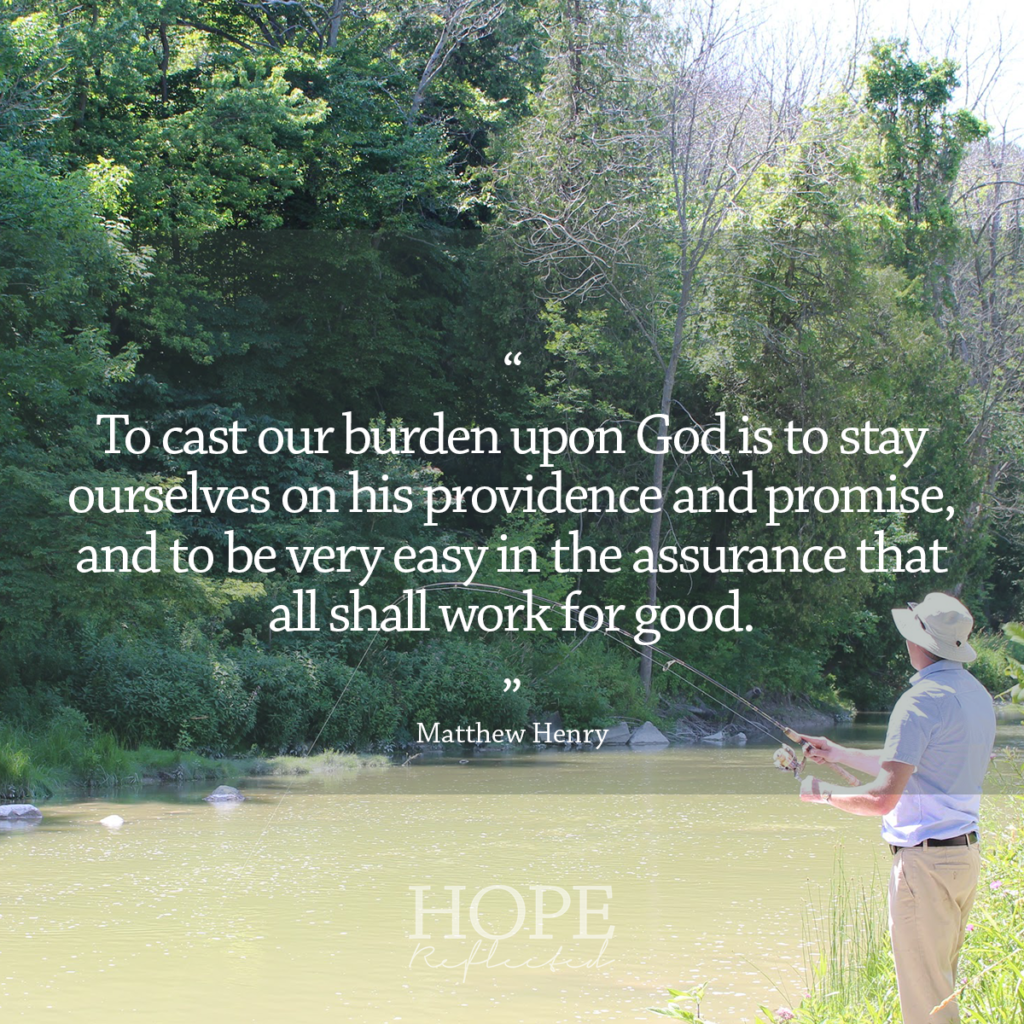
"To cast our burden upon God is to stay ourselves upon his providence and promise, and to be very easy in the assurance that all shall work for good." Matthew Henry | Read more about casting your cares at hopereflected.com

What does it mean “to cast”?

When boating, to cast off means to free your boat from its mooring and set out on the water. In angling, to cast is the act of throwing your fishing line and bait out over the water. While knitting, casting on is a method of adding new stitches that don’t depend on earlier stitches. No matter the context, the act of casting requires energy and exertion on the part of the person performing it.

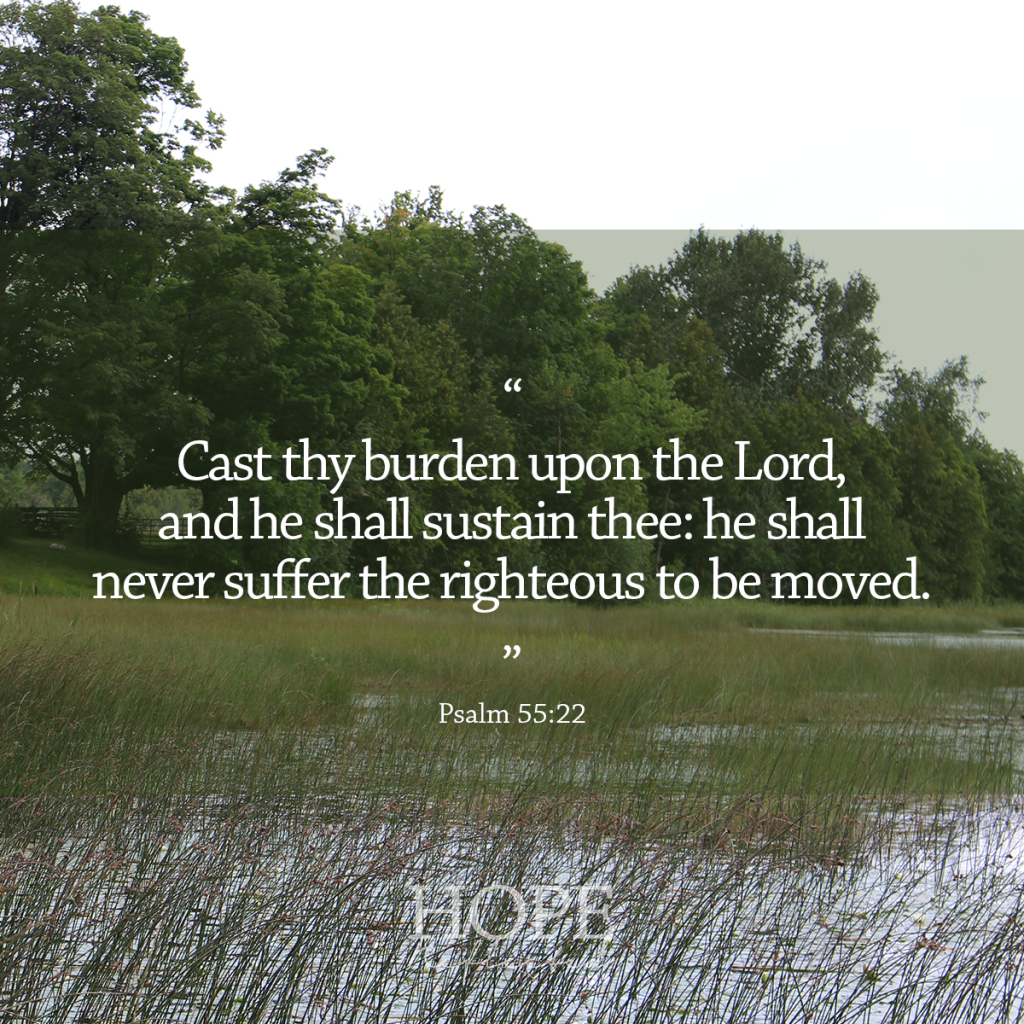
“Cast thy burden upon the Lord, and he shall sustain thee: he shall never suffer the righteous to be moved.”

Psalm 55:22

When David penned Psalm 55, he wrote in verse 22, “Cast thy burden upon the Lord, and he shall sustain thee: he shall never suffer the righteous to be moved.” We are to cast our burden on the Lord. We aren’t to hesitate, and we aren’t to pray and then worry, rather, we are to throw our cares on Him. What is our burden? Perhaps it’s a fear of the unknown, or an uncertain future. Maybe it’s worry over finances. It could even be concern for our physical or mental health. “Heaviness in the heart of man maketh it stoop,” we read in Proverbs 12:25. What is weighing heavy on your heart? Whatever our burden, we are to cast it on Him. In his commentary on Psalm 55, Matthew Henry said that, “To cast our burden upon God is to stay ourselves on his providence and promise, and to be very easy in the assurance that all shall work for good.” It’s easier said than done.

Casting takes work

Casting our care is certainly not for the faint of heart, and it always requires full disclosure to God. We can be quick to forget in our prayers that God sees and knows all – not even the darkest, deepest parts of our hearts are hidden to Him. If we are to truly cast our burden upon the Lord, if we truly want Him to sustain us, we must be totally honest and open with Him. We must be humble.

“Humble yourselves therefore under the mighty hand of God, that he may exalt you in due time: Casting all your care upon him; for he careth for you.”

1 Peter 5:6-7

Peter, in his first epistle to the Christians in and around Asia Minor, specifically when writing to the elders, encouraged them to “Humble yourselves therefore under the mighty hand of God, that he may exalt you in due time:” then he wrote, “Casting all your care upon him; for he careth for you.” (1 Peter 5:6-7). Part of casting our cares upon Him requires us to humble ourselves. Remember in Psalm 138:6 we understand that God is close to the humble, “but the proud he knoweth afar off.” It doesn’t matter how strong your pitching arm is, the farther away something is when you’re trying to cast to it, the more difficult it is. Spiritually, we cannot cast our cares on the Lord unless we are close to Him.  

Rather than looking everywhere else for support, we should look to Him to sustain us. “Come unto me, all ye that labour and are heavy laden, and I will give you rest,” Jesus promises in Matthew 11:28-30, “Take my yoke upon you, and learn of me; for I am meek and lowly in heart: and ye shall find rest unto your souls. For my yoke is easy, and my burden is light.”

Originally published as “Cast, don’t carry.” Independent Plus. May 14, 2020: 5. Print. Web.

Tuesday

11

August 2020

0

COMMENTS

Community

Written by , Posted in Christian Living, Published Work

"Nevertheless we made our prayer unto our God." Nehemiah 4:9 | Read more about community at hopereflected.com

Characteristics of a strong community

After giving up his position in the court of the Persian king Artaxerxes, Nehemiah served his people as governor in rebuilding the city of Jerusalem. We read all about the rebuilding of the city in the Old Testament book of Nehemiah, which presents us with a wonderful example of how prayer, encouragement, and loyalty build a strong community.

“Nevertheless we made our prayer unto our God,”

Nehemiah 4:9

When Nehemiah heard of the desolation of Jerusalem and that the city had been left in ruin, he was distraught, and his first reaction was to pray. “And it came to pass, when I heard these words, that I sat down and wept, and mourned certain days, and fasted, and prayed before the God of heaven,” (1:4). His city was destroyed, and only a remnant of the people was left. Throughout the book of Nehemiah, the importance of prayer is highlighted. Nehemiah was fervent in prayer; he sought the Lord first, and encouraged his community to do the same.

When we are going through a crisis and we are wearied by world news, is it our instinct as a community to cry out to God in prayer, or are we more apt to rest in our own abilities first? “Nevertheless we made our prayer unto our God,” (4:9). The Lord led Nehemiah to help rebuild the city, and through prayer Nehemiah and his community persevered.

Encouragement is a vital part of community

Just as prayer is a vital part of community, so is encouragement. Nehemiah encouraged his community to rebuild the walls of Jerusalem, and even when the going got tough and they faced incredible opposition, he continued to encourage his people. “Be not ye afraid of them: remember the LORD, which is great and terrible, and fight for your brethren, your sons, and your daughters, your wives, and your houses.” (4:14). When Nehemiah and his community came up against scorn and ridicule, instead of getting discouraged, they encouraged each other to keep going. When they were faced with physical opposition, they came together even stronger. “In what place therefore ye hear the sound of the trumpet, resort ye thither unto us: our God shall fight for us.” (4:20).

Do we rally together with our community, ready to serve with our neighbours and encourage those around us? Like discouragement, encouragement is equally contagious. Which do we spread? Despite the huge task before them, Nehemiah and his community encouraged one another.

Impacting a community for future generations

The book of Nehemiah not only shows us how prayer and encouragement can strengthen a community, but also how loyalty can impact a community for future generations. While some may think that rebuilding the city wall was a task reserved for stonemasons or skilled carpenters, in Nehemiah’s community there was a place for every person. Each member demonstrated their loyalty by coming together to see how they could help. “Next unto him repaired Uzziel the son of Harhaiah, of the goldsmiths. Next unto him also repaired Hananiah the son of one of the apothecaries, and they fortified Jerusalem unto the broad wall.” (3:8). From goldsmiths to perfumers, everyone was committed to getting the job done. Each of us brings a unique gift to our community, and we should be willing to share it with others.

Originally published as “Community.” Independent Plus. March 26, 2020: 6. Print. Web.

Friday

24

April 2020

1

COMMENTS

Noah: An Example in Obedience

Written by , Posted in Christian Living, Published Work

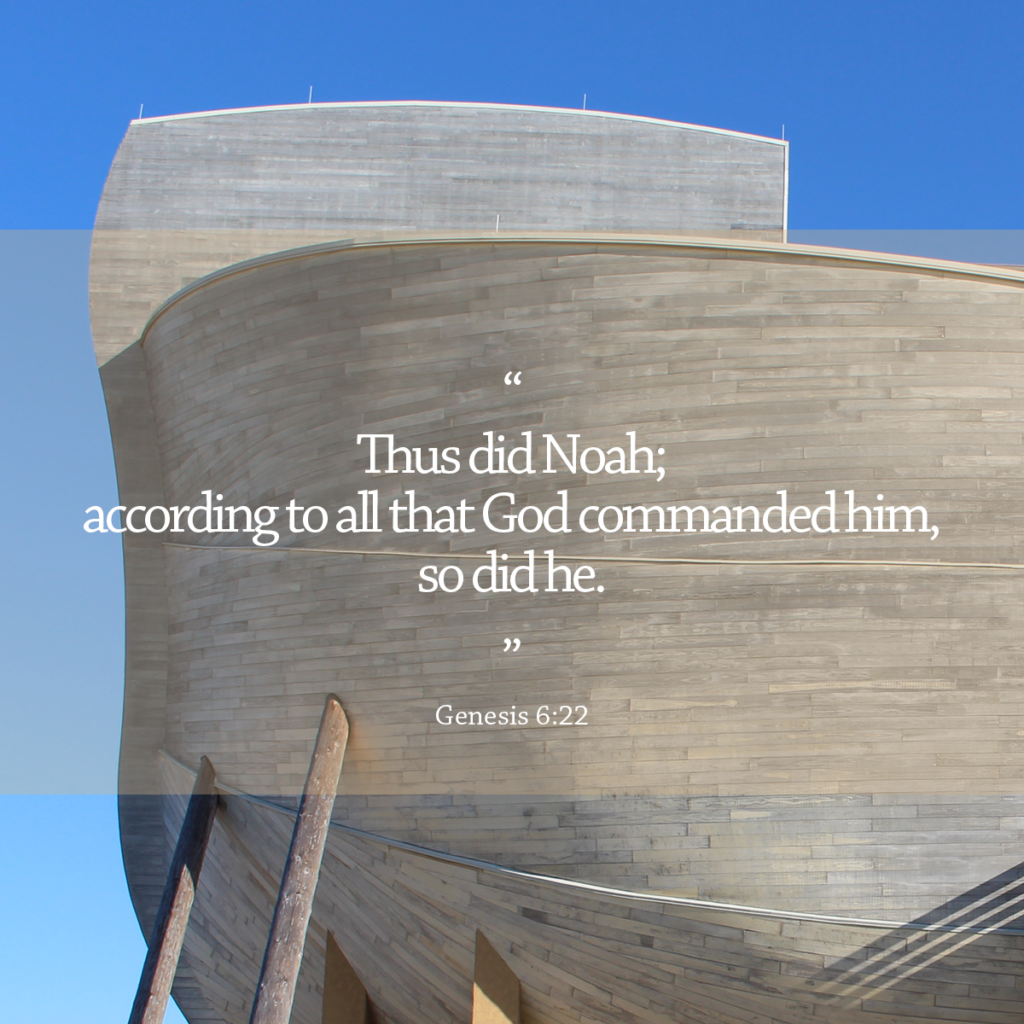
“Thus did Noah; according to all that God commanded him, so did he.” (Genesis 6:22) | Noah: An Example in Obedience | hopereflected.com

One cannot walk with God unless they are walking in obedience

Noah. Abraham. Rahab. Moses. Joshua. David. What is one thing that all of these people have in common? While their lives were all incredibly different, the commonality between them was obedience: They were each obedient to the call of the Lord.    

Look at Noah, for example. When Noah lived, “the wickedness of man was great in the earth,” we read in Genesis 6:5, “and that every imagination of the thoughts of his heart was only evil continually.” We think we’ve got it bad today! The Bible tells us that during Noah’s time, the earth was so filled with evil that the Lord felt bad that he had made man on the earth, and His heart was grieved. The Lord was so grieved that He decided to destroy man from the planet, “But Noah found grace in the eyes of the LORD.” (Gen. 6:8)

“But Noah found grace in the eyes of the LORD.”

Genesis 6:8

Why did Noah find grace in the eyes of the Lord? Well, we read in the next verse that Noah was a just man, blameless, and that He walked with God. One cannot walk with God unless they are walking in obedience, there’s just no other path. We can learn so much from Noah and his walk.

Noah didn’t hesitate

Consider this: Noah’s obedience to the Lord was immediate. When God said to Noah, “Make thee an ark,” (Gen. 6:14), Noah didn’t hesitate and say, “Lord, why do you want me to do that?” or “Are you sure you want me to do that? It’s not even raining.” No, Noah, didn’t hesitate. “Thus did Noah; according to all that God commanded him, so did he.” (6:22) Noah didn’t question God’s instruction, he didn’t question God’s timing, and he didn’t question his ability to complete the task. American Pastor Steven Furtick says that, “great moves of God are usually preceded by simple acts of obedience.” While the task at hand for Noah certainly wasn’t simple, it was a step that preceded a great move of God.  

It’s also important to recognize that Noah’s obedience was not influenced by others. While it is important that we are prayerful in our decision-making, and that we heed wise counsel, when we are walking with God as Noah did, our obedience won’t be influenced by anyone who doesn’t have our best interest at heart. D.L. Moody once said that, “There will be no peace in any soul until it is willing to obey the voice of God.” It may seem difficult, especially when others question us, however when we are walking in obedience to God, He grants us peace.  

Noah’s obedience saved his life and the life of his family. They entered the ark before the flood started. We read in Genesis 7:10 that it was seven days after they entered the ark that the flood actually started. Sometimes doing the right thing doesn’t make sense. We may not understand the timing, we may not see any realistic reason in the moment, but that’s the beauty of obeying God. We don’t have to have all the answers, because He always does what is best for us.

You can read more about Biblical obedience here.

Originally published as “Noah: An Example in Obedience.” Independent Plus. February 13, 2020: 6. Print. Web.

Thursday

9

April 2020

0

COMMENTS

His hands

Written by , Posted in Christian Living, Published Work

"Behold, I have graven thee upon the palms of my hands;" (Isaiah 49:16) | His hands | Read more hopereflected.com

We are always in God’s hands

“Behold, I have graven thee upon the palms of my hands;” (Isaiah 49:16) Our hands are amazing instruments. Consider them for a moment. We use them for almost everything. Our hands are always before us, and we know them. We use our hands to create, to give, to receive, to help, to shield, and to care. How many times have we heard the saying, “I know that like the back of my hand.” Just like we see our hands before us, we are always in God’s sight. We are always before Him, and He can use each one of us. Even in those times when we feel like our prayers are reverberating off the ceiling, we can be sure that He does hear. He has not forgotten us. John Gill compares Isaiah 49:16 with Song of Solomon 8:6, “Set me as a seal upon thine heart, as a seal upon thine arm:” – we are always with God. Even in our brokenness – especially in our brokenness – He can use us for His glory.

Remember His promise: “For I the Lord thy God will hold thy right hand, saying unto thee, Fear not; I will help thee.” (Isaiah 41:13) The right hand is referenced many times throughout Scripture, and it is a symbol of strength. David wrote in Psalm 17:7 that God “savest by thy right hand them which put their trust in thee from those that rise up against them.” Then, while in the wilderness, he wrote in Psalm 63:8 about God, “thy right hand upholdeth me.” In Psalm 73:23 he wrote that God “has holden me by my right hand.” Not only are we graven upon the palms of His hands, but God also promises to hold our right hand, wherever we are.

God holds us with His right hand

Where are you? When you have a personal relationship with the Lord, He is with you. In the second half of Isaiah 49:16, Isaiah wrote, “thy walls are continually before me”. Wherever we are, God is there. He is the architect of our lives, and as we are familiar with the walls inside our homes, so He knows all His plans for us. Remember David’s words in Psalm 139: “Whither shall I go from thy spirit? Or whither shall I flee from thy presence?” (v.7). No matter where we are – even in the depths of the sea, He is there. “Even there shall thy hand lead me, and thy right hand shall hold me.” (v.10). God is with us and He holds us with His right hand.

Just as we are always before God, graven upon the palms of His hands, so should we always set the Lord before us. “I have set the LORD always before me: because he is at my right hand, I shall not be moved.” (Psalm 16:8) What a great difference it makes when we let His hand steady us, and when we allow His hand to lead us! “Though I walk in the midst of trouble,” David wrote in Psalm 138:7, “thou wilt revive me; thou shalt stretch forth thine hand against the wrath of my enemies, and thy right hand shall save me.”

“Behold, I have graven thee upon the palms of my hands; thy walls are continually before me.” (Isaiah 49:16) This is God’s response to our fears that He would forget us! He will not! We are in His hands.

Originally published as “His hands.” Minto Express, Independent Plus, Arthur Enterprise-News, Mount Forest ConfederateWalkerton Herald-Times. January 30, 2020: 6. Print. Web.

Monday

30

March 2020

0

COMMENTS

When things don’t turn out as we planned

Written by , Posted in Christian Living, Published Work

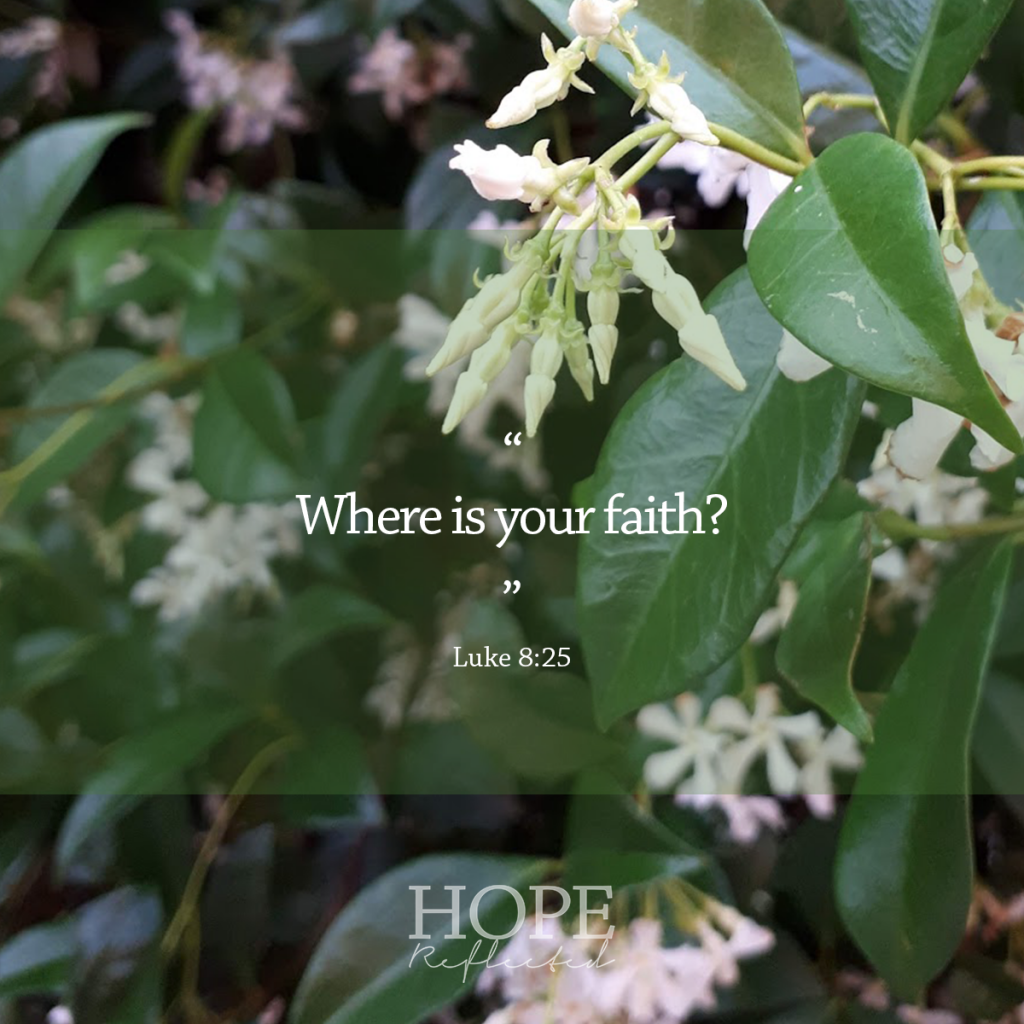
"Where is your faith?" (Luke 8:25) | Read more at hopereflected.com

Scottish poet Robert Burns wrote in 1765 about the best laid schemes of mice and men in his poem, “To a Mouse”. In the poem, written after Burns accidentally turned up a mouse’s nest with his plough, Burns considers the mouse more fortunate than he, because “The present only toucheth thee,”. Being human, Burns could not only see his present, he could look back and see his past, and though he couldn’t see the future, he could fret and worry about it.

God has a plan

It seems that not much has changed in the last two hundred and fifty-five years. So often, we spend our time fretting and worrying about the future that we miss out on what God has for us in the present. That’s not to say that planning ahead is a bad thing; on the contrary, the Bible tells us that planning for the future is wise (Proverbs 21:5). The key is, that rather than spend our time worrying, or getting discouraged when things don’t turn out as we planned, we should make a determined effort to direct our focus to God.

David wrote in Psalm 16:8, “I have set the LORD always before me: because he is at my right hand, I shall not be moved.” Regardless of his circumstances or the events happening around him, David purposed to set the Lord always before him. Before we make decisions, we should pray; as Anne Graham Lotz puts it, it is always to our benefit to be “pre-prayered” for whatever we face in life.

His plan is bigger than ours

We should also remember that even though we may plan things down to the tiniest detail, sometimes God has a different plan, and His plans are always the best for us. “For my thoughts are not your thoughts, neither are your ways my ways, saith the LORD. For as the heavens are higher than the earth, so are my ways higher than your ways, and my thoughts than your thoughts.” (Isaiah 55:8-9) We may not understand why He allows heartache and woes; but when we trust Him, we can understand that God always has a plan, and He always has His best for us in mind. “For I know the thoughts that I think toward you, saith the LORD, thoughts of peace, and not of evil, to give you an expected end.” (Jeremiah 29:11)

“Where is your faith?” Jesus asked the disciples this in Luke 8:25 after He saved them from a storm on the water. When the wind and waters rage, who do we trust, and where do we turn? We should trust God, and turn our eyes to Him. When things don’t turn out as we planned, we can still rest in Him. “And we know that all things work together for good to them that love God, to them who are the called according to his purpose.” (Romans 8:28)

He is the first and the last, He knows our past, present, and He holds the future. He is the author and finisher of our faith.

Originally published as “When things don’t turn out how we plan.” Minto Express, Independent Plus, Arthur Enterprise-News, Mount Forest ConfederateWalkerton Herald-Times. January 9, 2020: 6. Print. Web.

Friday

27

March 2020

0

COMMENTS

Thoughts around thankfulness

Written by , Posted in Christian Living, Published Work

“I would maintain that thanks are the highest form of thought; and that gratitude is happiness doubled by wonder.” (G.K. Chesterton) | Read more at hopereflected.com

We should get in the habit of gratitude

A.W. Tozer once said that, “gratitude is an offering precious in the sight of God. And it is one that the poorest of us can make and be not poorer but richer for having made it.” We often read throughout the Bible about the importance of thankfulness in our every day lives, but the reality is that most of us are more quick to take our blessings for granted than to show gratitude.

Thankfulness is an attitude

Thankfulness need not be an elaborate planned event – such as the Thanksgiving holiday we celebrate each year – thankfulness is something that once a spark is created, can turn into an ever-burning fire. It’s an attitude that we can cultivate, regardless of the time of year.

In his letter to the Philippians, Paul wrote, “I thank my God upon every remembrance of you,”. Consider your own thoughts for a moment. How often do we think of a particular someone throughout the day: A spouse, mother, father, child, sister, brother, niece, nephew, or even our co-workers? Chances are, we think of several or all of the aforementioned many times throughout the day. And yet, how often do we give thanks for them? Paul wrote that he thanked God on every remembrance of his friends. A prayer of thanks, no matter how short, so long as it is genuine, is heard by God.

Thankfulness is our duty

An attitude of gratitude is part of our calling as Christians. Did you know we have a duty to thankfulness? Paul wrote in his second letter to the church at Thessalonica that, “we are bound to give thanks always to God for you,” (2 Thessalonians 2:13). We are bound to give thanks! Despite the second epistle to the Thessalonians being written after a somewhat discouraging description of coming events, Paul exhorts fellow believers that we should be thankful to God for all His blessings and for what He has called us to. He is our Comforter, our Rock, our Buckler, our High Tower, our Salvation! His blessings are everlasting.

Not only should thankfulness be part of the Christian’s character, it’s something we should do unceasingly. We’re all familiar with 1 Thessalonians 5:16, “pray without ceasing,” and for some reason we don’t as easily remember the other “cease not” counsel found in Ephesians 1:15-16: “Wherefore I also, after I heard of your faith in the Lord Jesus, and love unto all the saints, cease not to give thanks for you, making mention of you in my prayers;” We should cease not to give thanks. We should get in the habit of gratitude.

“Thanks are the highest form of thought”

Small utterances of praise throughout the day can make all the difference in your life.  As G.K. Chesterton said, “You say grace before meals. All right. But I say, grace before the concert and the opera, and grace before the play and the pantomime, and grace before I open a book, and grace before sketching, painting, swimming, fencing, boxing, walking, playing, dancing, and grace before I dip the pen in the ink.”

“I would maintain that thanks are the highest form of thought; and that gratitude is happiness doubled by wonder.”

Originally published as “Thoughts around thankfulness” Minto Express, Independent Plus, Arthur Enterprise-News, Mount Forest ConfederateWalkerton Herald-Times. November 28, 2019: 6. Print. Web.

Wednesday

18

March 2020

0

COMMENTS

10 verses to calm and reassure your anxious mind

Written by , Posted in Christian Living, Encouragement

During times of uncertainty, and when we focus on what’s happening all around us, it can be easy to lose our focus on God. We need God now more than ever! In the midst of all the staying home and social-distancing, we should be clinging to Him now more than ever. When we need reassurance and reminders of God’s goodness — and we all do, don’t we — God’s Word is the best place we can go. I hope these 10 verses to calm and reassure your anxious mind are an encouragement to your spirit. Read them, write them down, print them out, and commit them to memory so you can calm your anxious mind no matter where you are. Even when we don’t understand the plan or the purpose, we can trust the Great Planner. Remember, nothing is a surprise to God!

1. Joshua 1:9

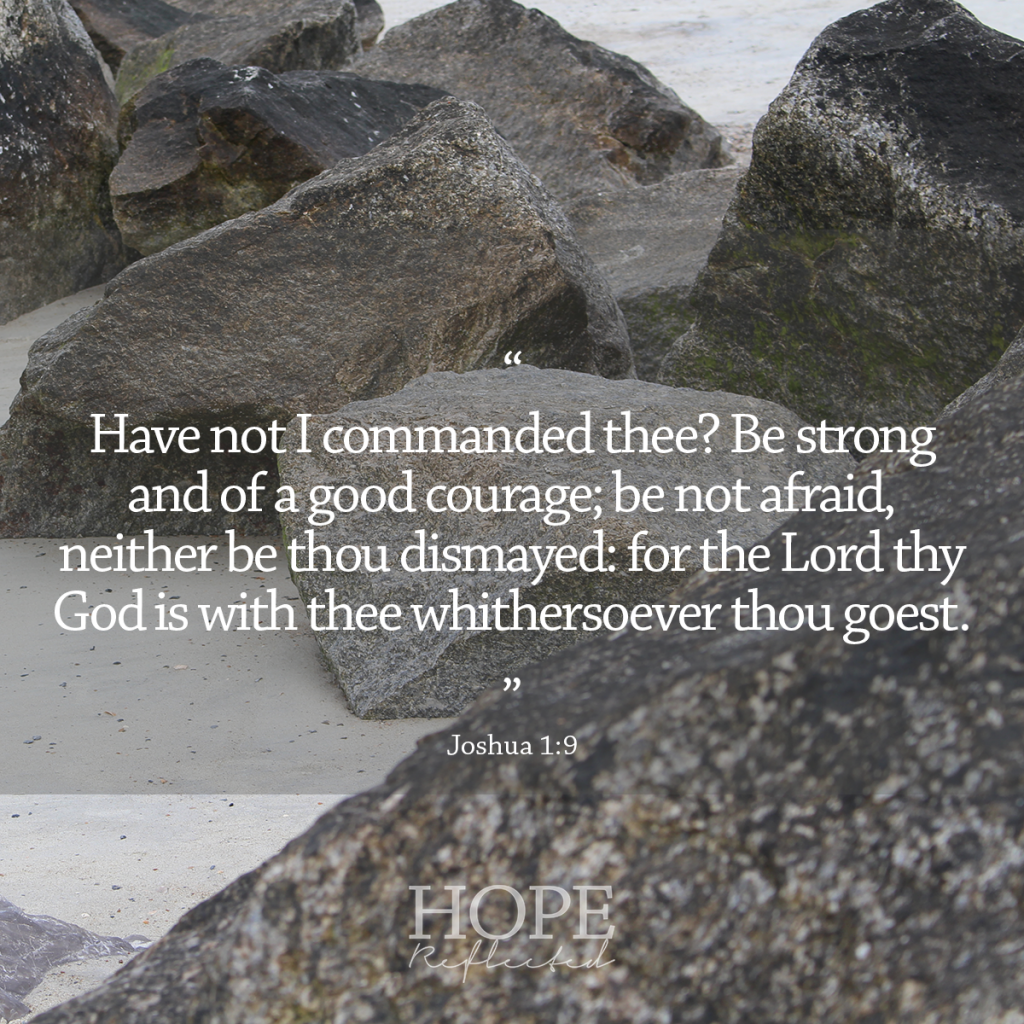
“Have not I commanded thee? Be strong and of a good courage; be not afraid, neither be thou dismayed: for the Lord thy God is with thee whithersoever thou goest.” (Joshua 1:9)

"Have not I commanded thee? Be strong and of a good courage; be not afraid, neither be thou dismayed: for the Lord thy God is with thee whithersoever thou goest." (Joshua 1:9) | 10 verses to calm and reassure your anxious mind | Read more at hopereflected.com

2. Psalm 55:22

“Cast thy burden upon the Lord, and he shall sustain thee: he shall never suffer the righteous to be moved.” (Psalm 55:22)

"Cast thy burden upon the Lord, and he shall sustain thee: he shall never suffer the righteous to be moved." (Psalm 55:22) | 10 verses to calm and reassure your anxious mind | Read more at hopereflected.com

3. Psalm 86:7

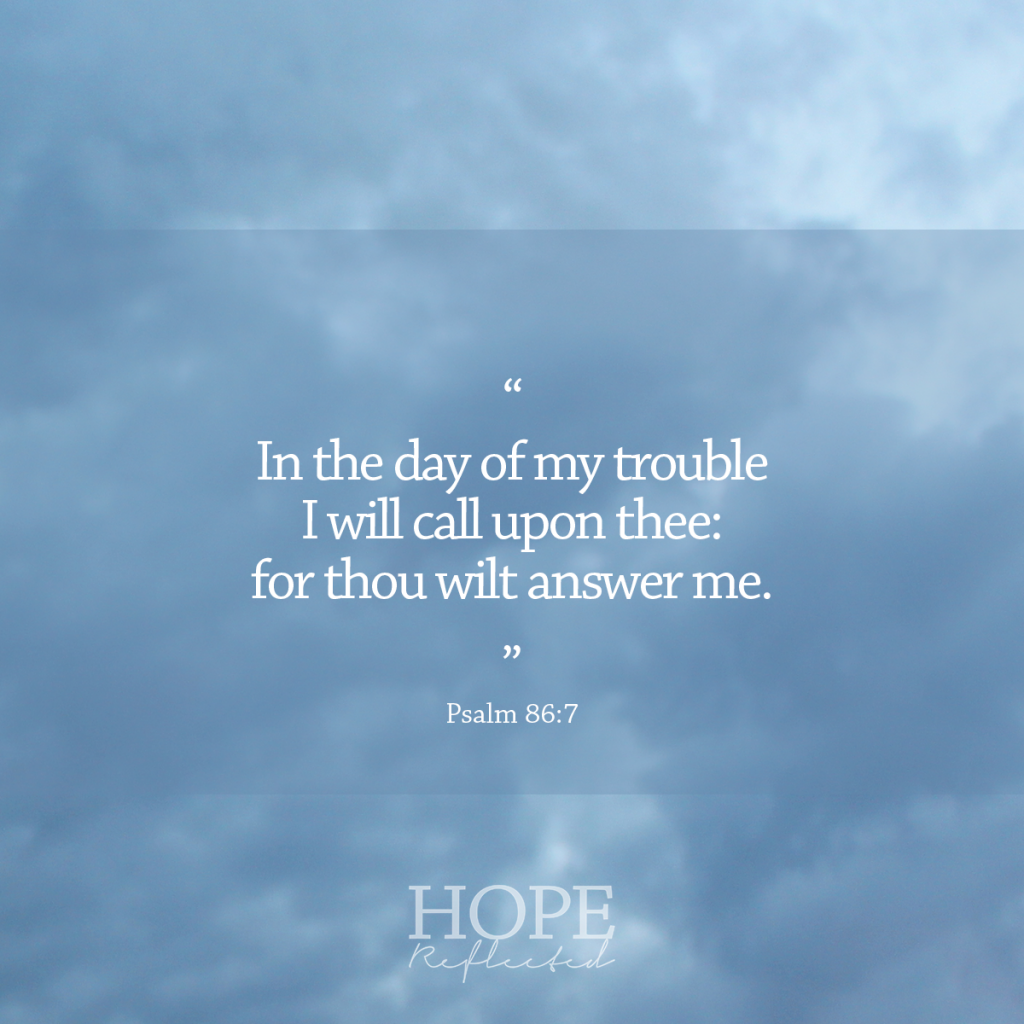
“In the day of my trouble I will call upon thee: for thou wilt answer me.” (Psalm 86:7)

"In the day of my trouble I will call upon thee: for thou wilt answer me." (Psalm 86:7) | 10 verses to calm and reassure your anxious mind | Read more at hopereflected.com

4. Psalm 91:4

“He shall cover thee with his feathers, and under his wings shalt thou trust: his truth shall be thy shield and buckler.” (Psalm 91:4)

"He shall cover thee with his feathers, and under his wings shalt thou trust: his truth shall be thy shield and buckler." (Psalm 91:4) | 10 verses to calm and reassure your anxious mind | Read more at hopereflected.com

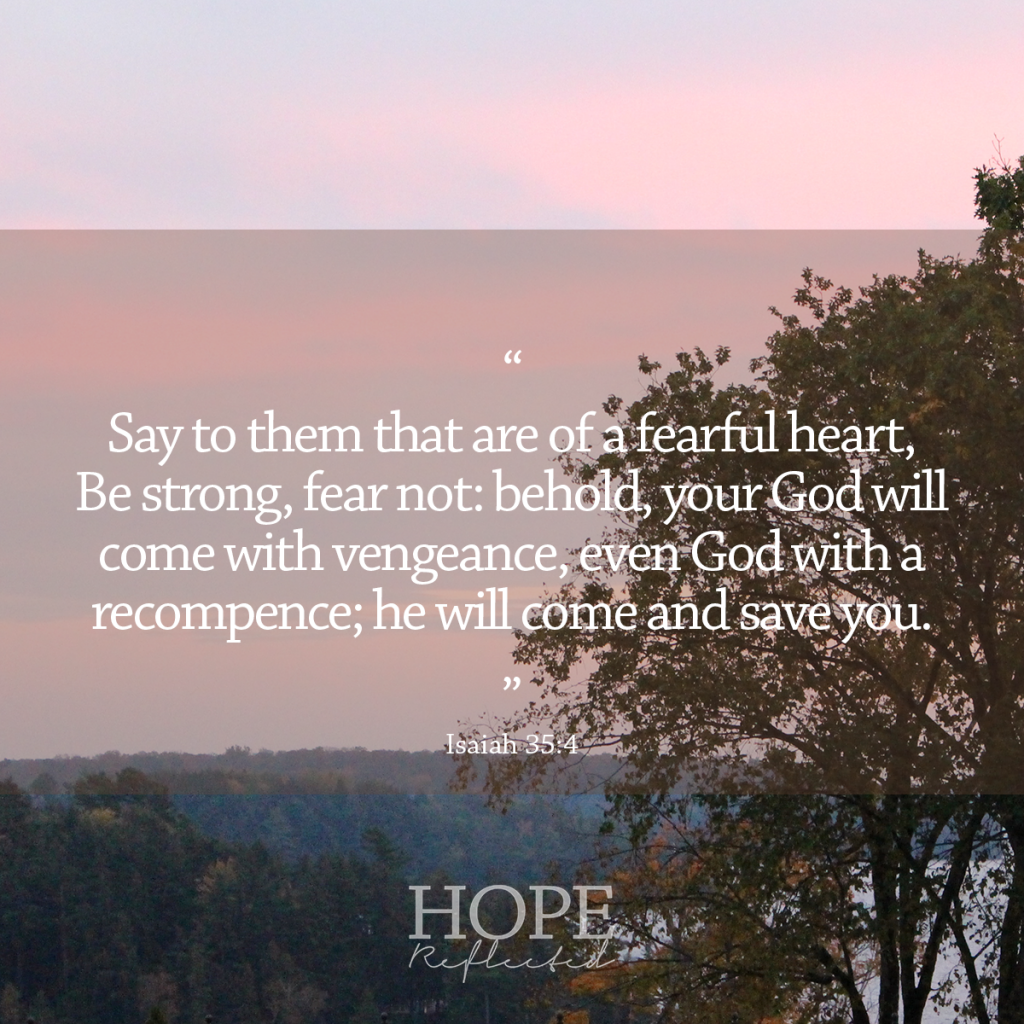
5. Isaiah 35:4

“Say to them that are of a fearful heart, Be strong, fear not: behold, your God will come with vengeance, even God with a recompence; he will come and save you.” (Isaiah 35:4)

"Say to them that are of a fearful heart, Be strong, fear not: behold, your God will come with vengeance, even God with a recompence; he will come and save you." (Isaiah 35:4) | 10 verses to calm and reassure your anxious mind | Read more at hopereflected.com

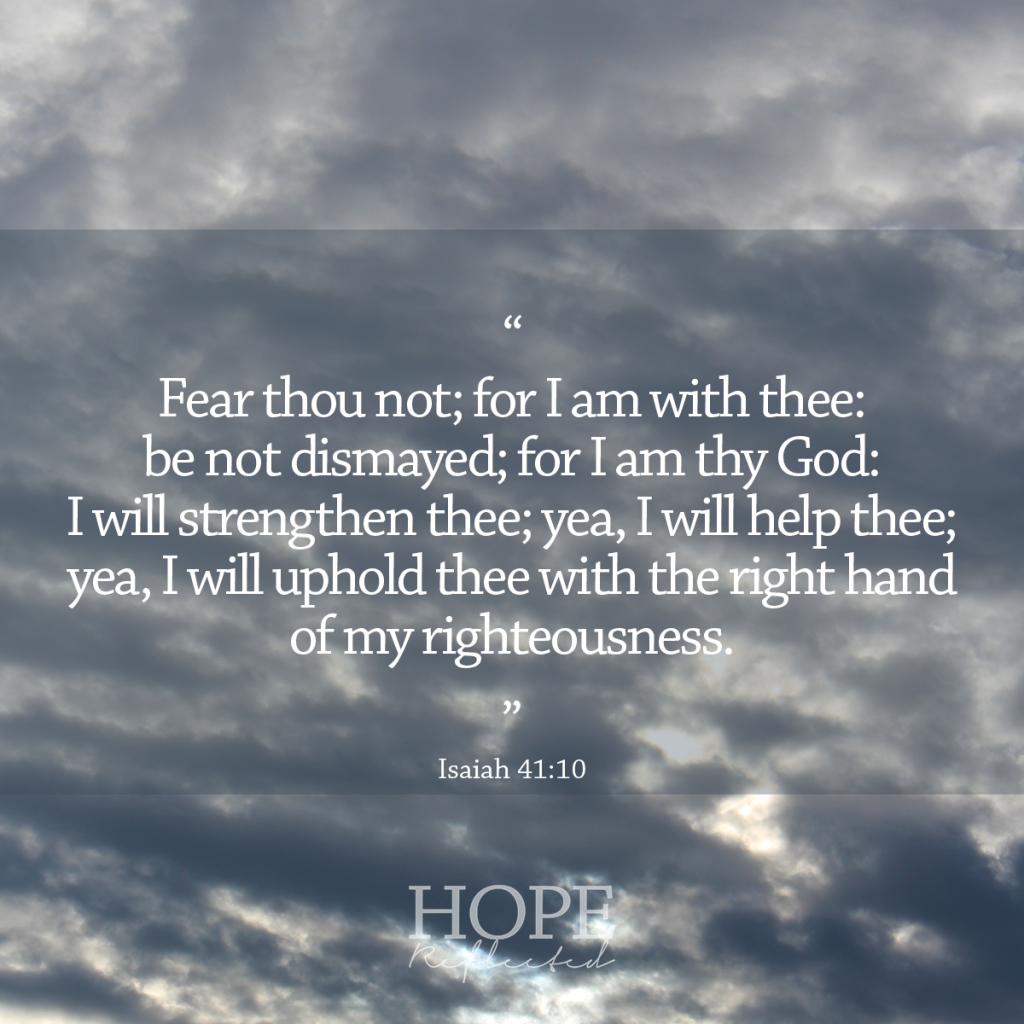
6. Isaiah 41:10

“Fear thou not; for I am with thee: be not dismayed; for I am thy God: I will strengthen thee; yea, I will help thee; yea, I will uphold thee with the right hand of my righteousness.” (Isaiah 41:10)

"Fear thou not; for I am with thee: be not dismayed; for I am thy God: I will strengthen thee; yea, I will help thee; yea, I will uphold thee with the right hand of my righteousness." (Isaiah 41:10) | 10 verses to calm and reassure your anxious mind | Read more at hopereflected.com

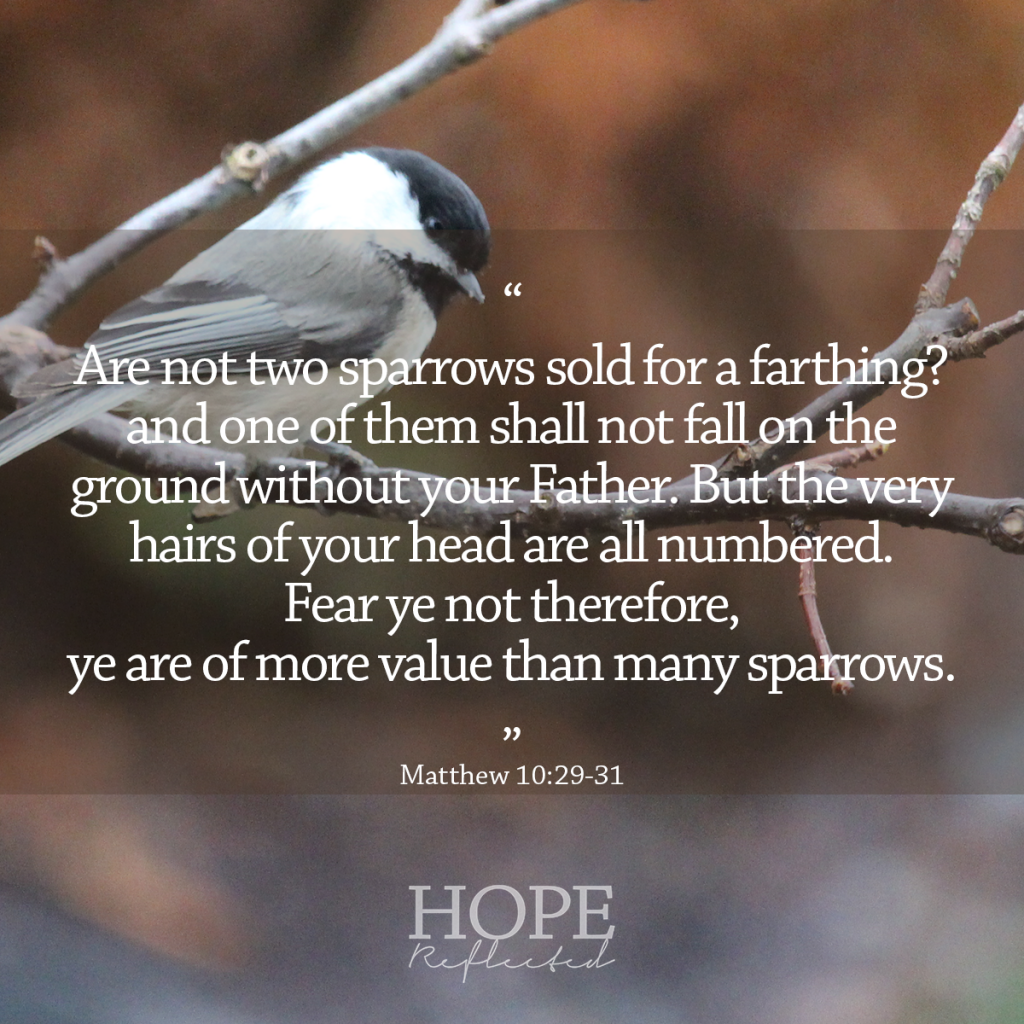
7. Matthew 10:29-31

“Are not two sparrows sold for a farthing? and one of them shall not fall on the ground without your Father. But the very hairs of your head are all numbered. Fear ye not therefore, ye are of more value than many sparrows.” (Matthew 10:29-31)

"Are not two sparrows sold for a farthing? and one of them shall not fall on the ground without your Father. But the very hairs of your head are all numbered. Fear ye not therefore, ye are of more value than many sparrows." (Matthew 10:29-31) | 10 verses to calm and reassure your anxious mind | Read more at hopereflected.com

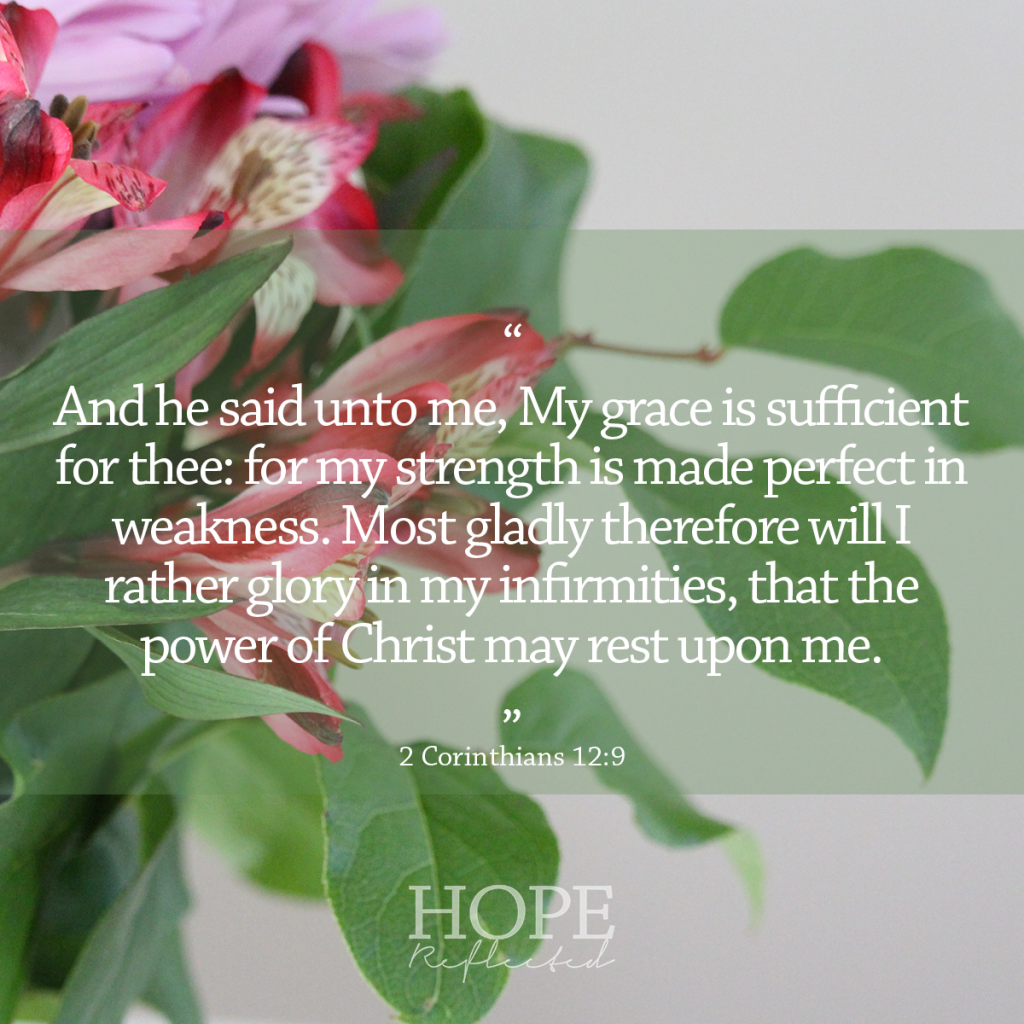
8. 2 Corinthians 12:9

“And he said unto me, My grace is sufficient for thee: for my strength is made perfect in weakness. Most gladly therefore will I rather glory in my infirmities, that the power of Christ may rest upon me.” (2 Corinthians 12:9)

"And he said unto me, My grace is sufficient for thee: for my strength is made perfect in weakness. Most gladly therefore will I rather glory in my infirmities, that the power of Christ may rest upon me." (2 Corinthians 12:9) | 10 verses to calm and reassure your anxious mind | Read more at hopereflected.com

9. Philippians 4:6

“Be careful for nothing; but in every thing by prayer and supplication with thanksgiving let your requests be made known unto God.” (Philippians 4:6)

"Be careful for nothing; but in every thing by prayer and supplication with thanksgiving let your requests be made known unto God." (Philippians 4:6) | 10 verses to calm and reassure your anxious mind | Read more at hopereflected.com

10. 2 Timothy 1:7

“For God hath not given us the spirit of fear; but of power, and of love, and of a sound mind.” (2 Timothy 1:7)

"For God hath not given us the spirit of fear; but of power, and of love, and of a sound mind." (2 Timothy 1:7) | 10 verses to calm and reassure your anxious mind | Read more at hopereflected.com